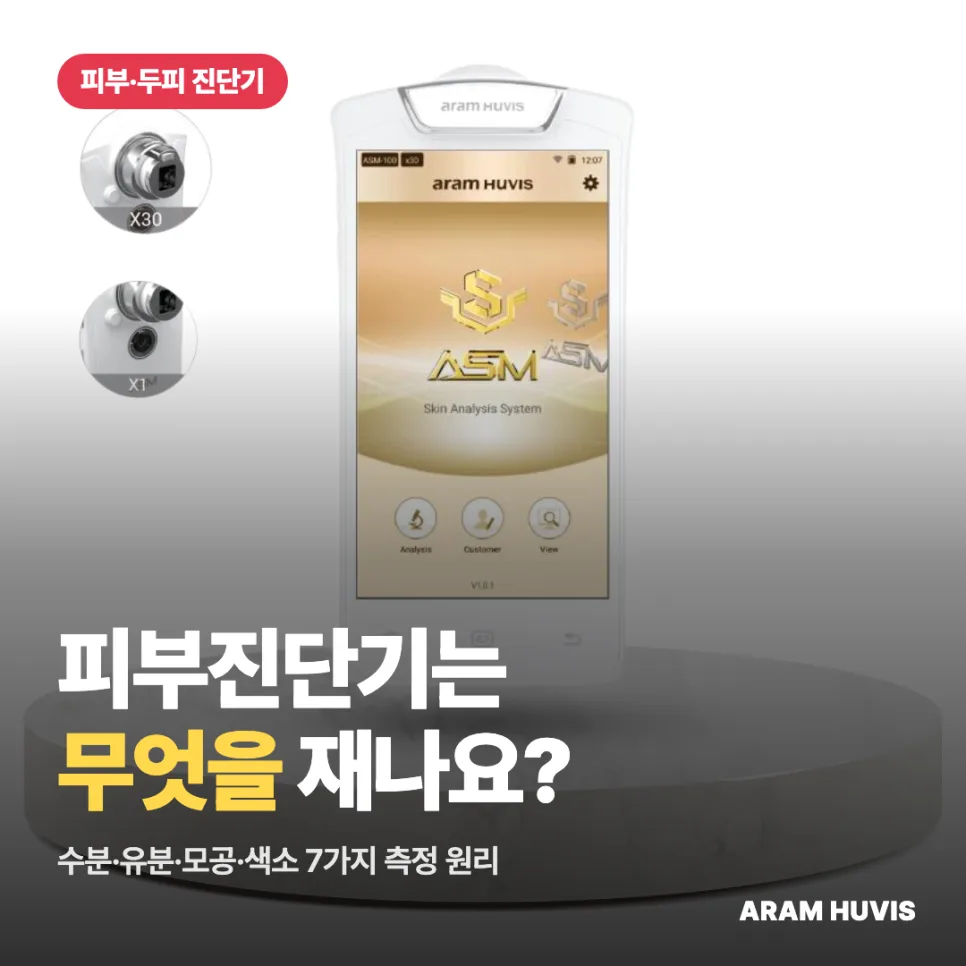
Head spa vs. scalp scaling: where do measurements show the difference?
Scalp scaling clears built-up flakes and sebum from the surface, while a head spa relaxes the scalp with massage and warmth. Measuring the scalp first shows which one suits the current condition.

“Aren’t they the same thing?” Visitors who come to have their scalp measured ask this often about head spas and scalp scaling. The names sound alike, but what each service does is quite different.
Short answer
- Scalp scaling clears built-up flakes and sebum from the scalp surface.
- A head spa relaxes the whole scalp with massage, warmth, and nourishing steps.
- Which first: measure the current scalp. Oily with visible flakes points to clearing first; tight and dry without redness points to relaxing first.
- Both together: many people clear the surface first, then relax.
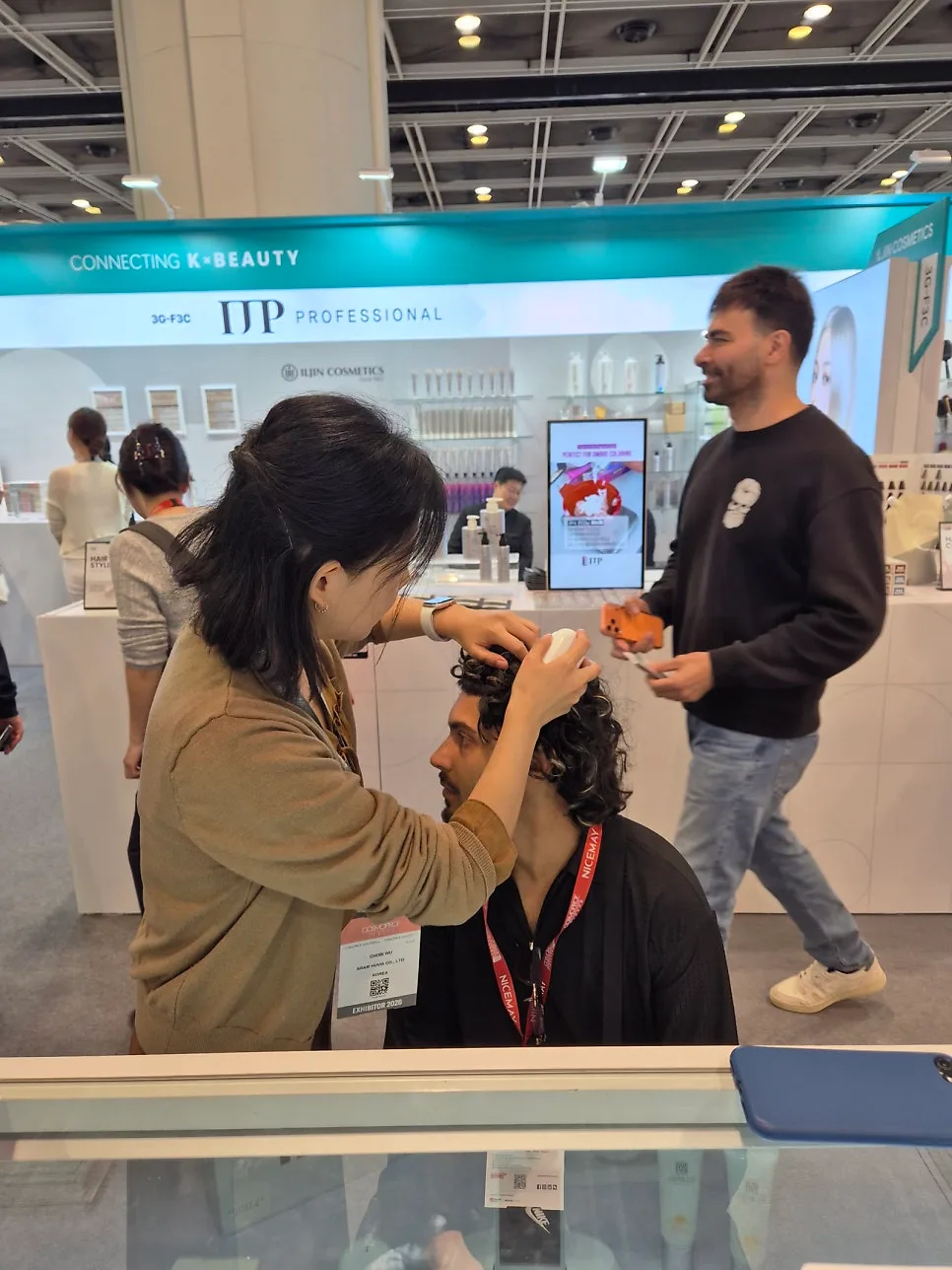
At trade-show booths I measure visitors’ scalps on the spot and look at the screen with them. After the scan they always ask: “So, spa or scaling?”
What does scalp scaling do?
Scaling is a service that removes old flakes and sebum that have built up on the scalp surface.
Think of it as tidying residue that remains around pores even after washing. It clears the surface.
Magnified on a screen, some scalps show pore openings that look blocked and white. Those scalps suit scaling first.
So for people whose scalp gets oily easily, shows white flaking, or leaves hair flat quickly, scaling comes to my mind first.
How is a head spa different?
A head spa works differently. It does not strip anything away. It loosens the scalp and the whole head slowly.
Massage on tense spots, warming, and nourishing steps come as one package.
A heavily used scalp can get stiff like a shoulder. The spa softens it, so it is closer to relaxation.
That is why it suits people whose scalp often feels tight, whose head feels heavy and tired, or who feel stiffness from stress.

How does measuring show which one comes first?
Before choosing, I look at the screen together with the client to confirm what the scalp is like today.
If the scalp looks shiny with visible flakes, clearing comes first. If it feels tight and dry without redness, relaxing comes first.
I look at the current condition more than the numbers. Even the same person’s scalp changes quite a bit with the season and the day’s condition.
Here is a side-by-side view.
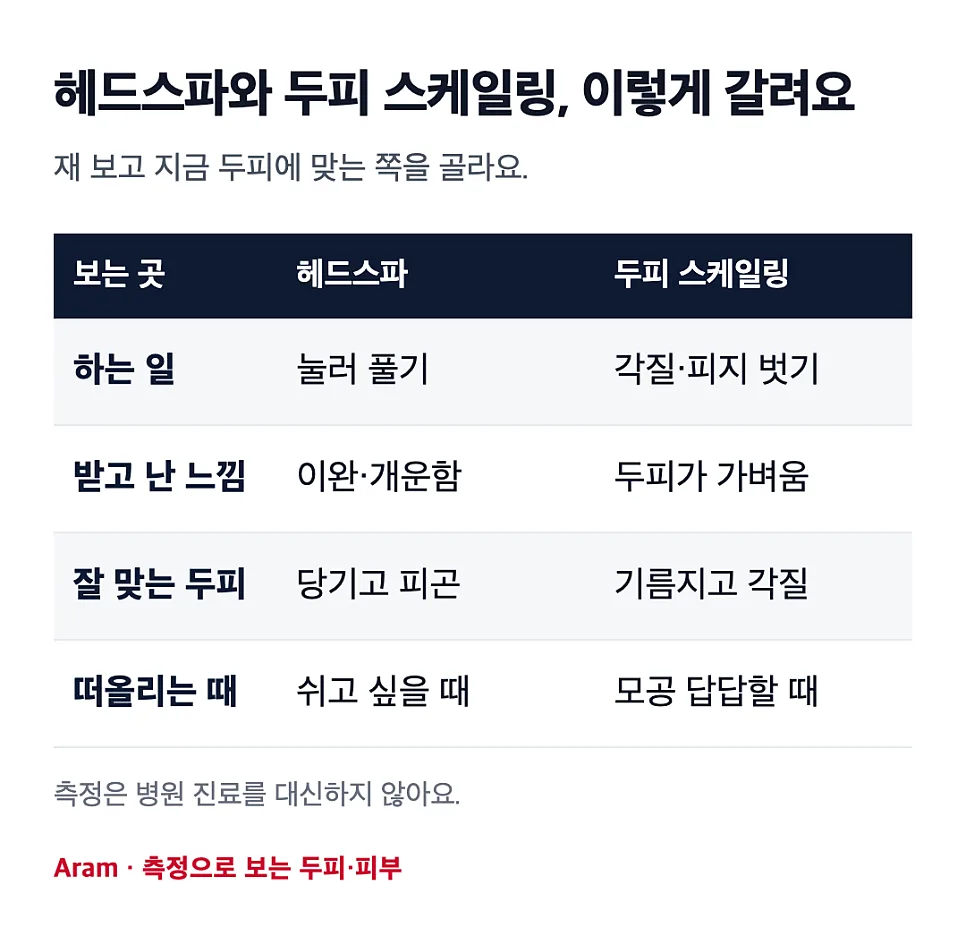
| What to look at | Head spa | Scalp scaling |
|---|---|---|
| What it does | Press and loosen | Remove flakes and sebum |
| How it feels after | Relaxed, refreshed | Scalp feels lighter |
| Scalp it suits | Tight and tired | Oily with flakes |
| When to think of it | When you want to rest | When pores feel clogged |
Measurement does not replace medical care.
Can you get both together?
Yes. Clearing the surface first and relaxing afterward is a natural order.
If you receive only massage on a blocked scalp, nourishing products may not absorb well. So the order is clear, then replenish.
Look at your scalp before booking. Choosing without looking can leave you with the service you do not need right now.
FAQ
Q. Can I get scaling every time?
If you do not have many flakes, scraping often can leave the scalp feeling tight. Ask about the interval between sessions.
Q. Does a spa alone leave the scalp clean?
Massage alone may not remove old flakes as well. It depends on the scalp condition.
Q. Can I do it at home instead?
Washing carefully every day keeps the scalp fairly tidy. But it is hard to see the current condition with your own eyes.
Today, look at your part line in the mirror. Just checking whether it is oily or flaky tells you which one comes first.
If you run a salon, see What should I look for when choosing a scalp analyzer for a hair salon or head spa?
About ARAM HUVIS
ARAM HUVIS has built skin and scalp measurement devices since 2002. For questions about measuring scalp condition, contact us.
Measurements are for reference and do not replace medical diagnosis or treatment. ARAM HUVIS analyzers measure and display skin and scalp condition and do not diagnose or treat any disease.