
Why does concealer look gray when you layer it thick over dark spots?
Layering concealer over melasma or dark spots often makes the area look gray. Choose the color of a corrector under the concealer first, use a small amount, and tap only the edges.

Thick coverage seems like it should hide spots better, but it is often the opposite. Layering concealer over melasma tends to make just that spot look gray. In spot coverage, look at color before amount.
Short answer
- Thick layers go gray: deeper pigment shows through more as gray when concealer sits on top.
- Start with color: brown spots, red marks, bluish under-eyes, and white patches each need a different base color.
- Use less: a small dab of corrector, a little concealer, and tap only the edges.
- Sunscreen comes first as the base step.
At trade-show booths and department-store pop-ups, I measure visitors’ skin on the spot, look at the numbers on screen together, and then hand over matched cosmetics and samples. We look at the current skin before deciding what to apply.
Covering spots follows the same order. Before choosing what to cover with, look at what color the spot is.
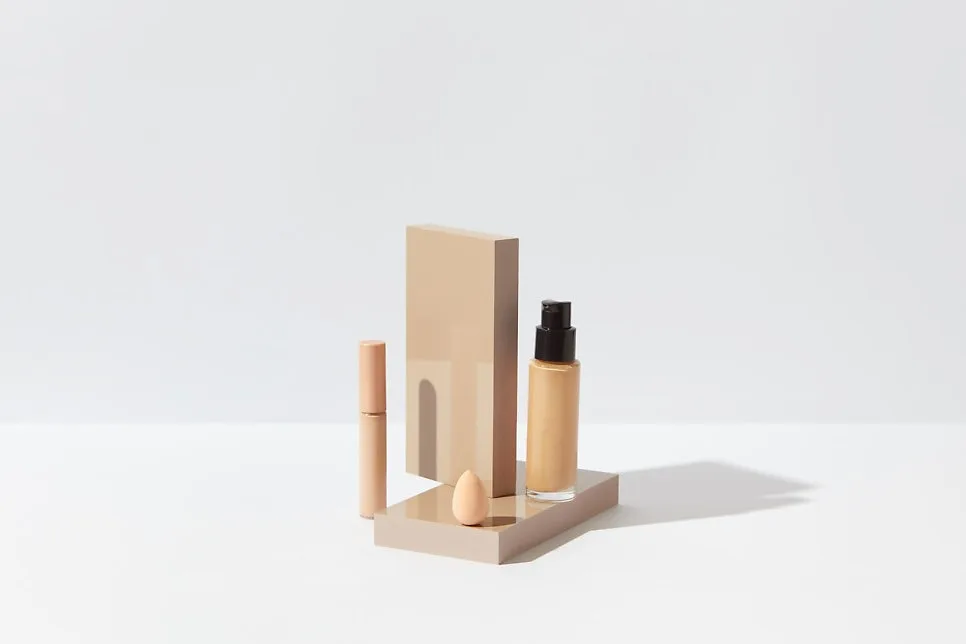
Why start with the color of the spot?
Brown melasma and spots, red marks, bluish under-eyes, white patches.
Even for the same coverage goal, the color to put underneath changes by spot color.
The principle is simple: on the color wheel, two colors opposite each other soften one another when mixed. Red and green are such a pair.

| Spot color | Color to put underneath |
|---|---|
| Brown melasma or spots | A peach tone lighter than your skin |
| Red marks | Green (yellow for darker skin) |
| Bluish under-eyes | Peach or orange |
| Purplish under-eyes | Yellow |
| White patches | Do not cover; fill to the surrounding skin color |
Sources: Dermatology News (2016) column by a dermatologist; for white patches, American Academy of Dermatology (AAD) guidance. Details by skin type are omitted.
Note that for white patches the direction is opposite. Dark spots are brightened; white patches are filled to match the surrounding skin.
Why does melasma turn gray?
A dermatologist’s column singles out brown as the hardest color to correct.
The deeper the pigment, the grayer it looks when concealer is placed on it.
So for brown, do not put a beige or brown concealer on directly. Lay a peach corrector underneath first.
That corrector must be lighter than your skin. If it is darker, the spot looks even deeper.
Shallow pigment such as freckles is covered fairly easily.
Melasma is on the deeper side, so aim for “less visible” rather than erasing it.

What is the order for covering spots?
The order is sunscreen, corrector, concealer, powder. The common mistake is applying a lot at once.
- Wait until the sunscreen has absorbed.
- Dab peach corrector only as large as the spot.
- Take a very small amount of skin-tone concealer and tap it with your fingertip.
- Leave the center and tap only the outer edge to blend.
- Press a thin layer of powder to set.
Rubbing moves the corrector underneath, and it shows through again.
For widely spread melasma, lay a thin foundation and add concealer only on the darkest spots.
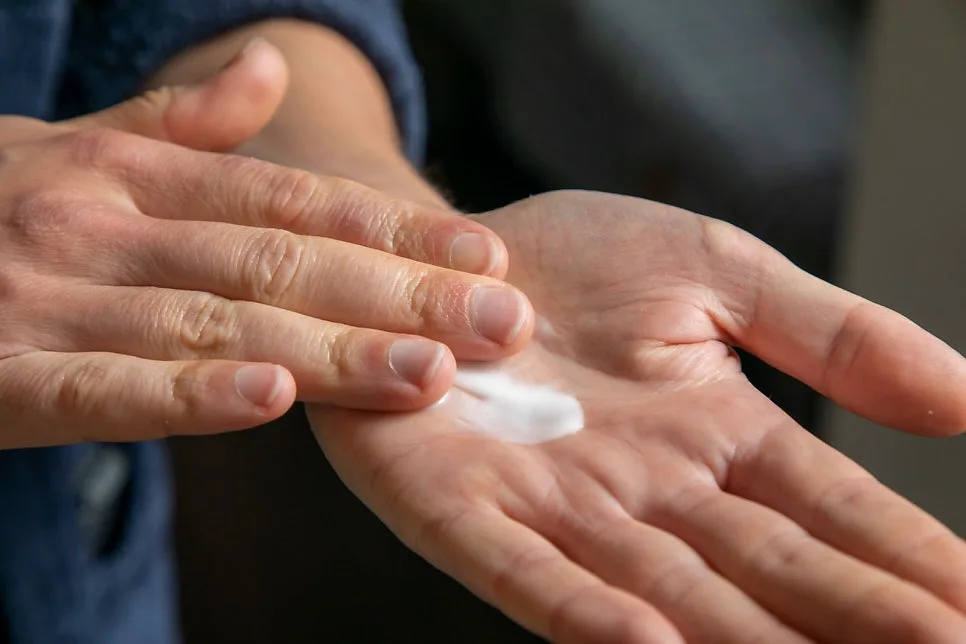
Sunscreen is the first step, separate from covering.
The AAD also names daily sun protection as the first way to make melasma less visible.
Use SPF 30 or higher, water-resistant, even on cloudy days. Apply 15 minutes before going out and reapply every 2 hours.
Tinted sunscreen with iron oxides is also suggested. Avoid products that sting or burn, since that irritation can darken dark spots further.
When should you see a dermatologist before covering?
Some things should be checked before covering. If any of the following apply, see a dermatologist before doing spot coverage.
- A spot that looks different from your other spots
- A spot that changes in size, shape, or color
- A spot that itches or bleeds
- A white patch that is new or spreading
The AAD also advises seeing a board-certified dermatologist for such spots. For white patches too, find the cause before covering.

How do you handle white patches?
Brighter concealer makes white patches stand out more, so instead add color to match the surrounding skin.
The AAD notes that makeup, self-tanning products, and skin dyes can be used.
Makeup lasts a day; self-tanners and skin dyes last about 3 to 5 days.
When choosing, products containing DHA (dihydroxyacetone) are suggested.
DHA is an ingredient that reacts with amino acids on the skin surface and darkens it. Do not use it around the eyes.
Sun tanning increases the color gap between the patch and the surrounding skin, so take care of sun protection separately.
This guide covers makeup coverage and does not replace diagnosis or medical care.
For white patches, filling to the surrounding color looks far more natural than covering.
When I measure skin in person, I also start by looking at color on the screen together. Covering starts from color in the same way.
FAQ
Q. Why does my concealer look gray over melasma?
Deeper pigment shows through more as gray when concealer is placed on top. Put a peach corrector lighter than your skin underneath first.
Q. How much concealer should I use?
A very small amount. Tap only the outer edge of the spot rather than layering in the center.
Q. Should I cover a spot that is changing?
No. Spots that change in size, shape, or color, itch, or bleed should be seen by a dermatologist first.
Tomorrow morning, halve the amount of concealer and tap only the edges. The area that looked gray should look less visible.
References
- Dermatology News (2016), Color correcting – for skin blemishes | MDedge
- American Academy of Dermatology (AAD), Melasma: Self-care
- American Academy of Dermatology (AAD), Vitiligo: How to make it less visible and prevent spreading
- American Academy of Dermatology (AAD), What to look for: ABCDEs of melanoma
- U.S. FDA, Sunless Tanners & Bronzers
About ARAM HUVIS
ARAM HUVIS has built skin and scalp measurement devices since 2002. Questions about skin measurement are welcome through our contact page.
Measurements are for reference and do not replace medical diagnosis or treatment. ARAM HUVIS analyzers measure and display skin and scalp condition and do not diagnose or treat any disease.