
Scalp Flakes vs Dandruff: What Is the Difference, and When to See a Dermatologist?
Dandruff is not separate from scalp flaking; it is the name for scalp flakes that fall visibly, like rice bran. Whether a dermatologist should check is judged less by the feel of the flakes than by redness and whether the flaking has spread beyond the scalp.
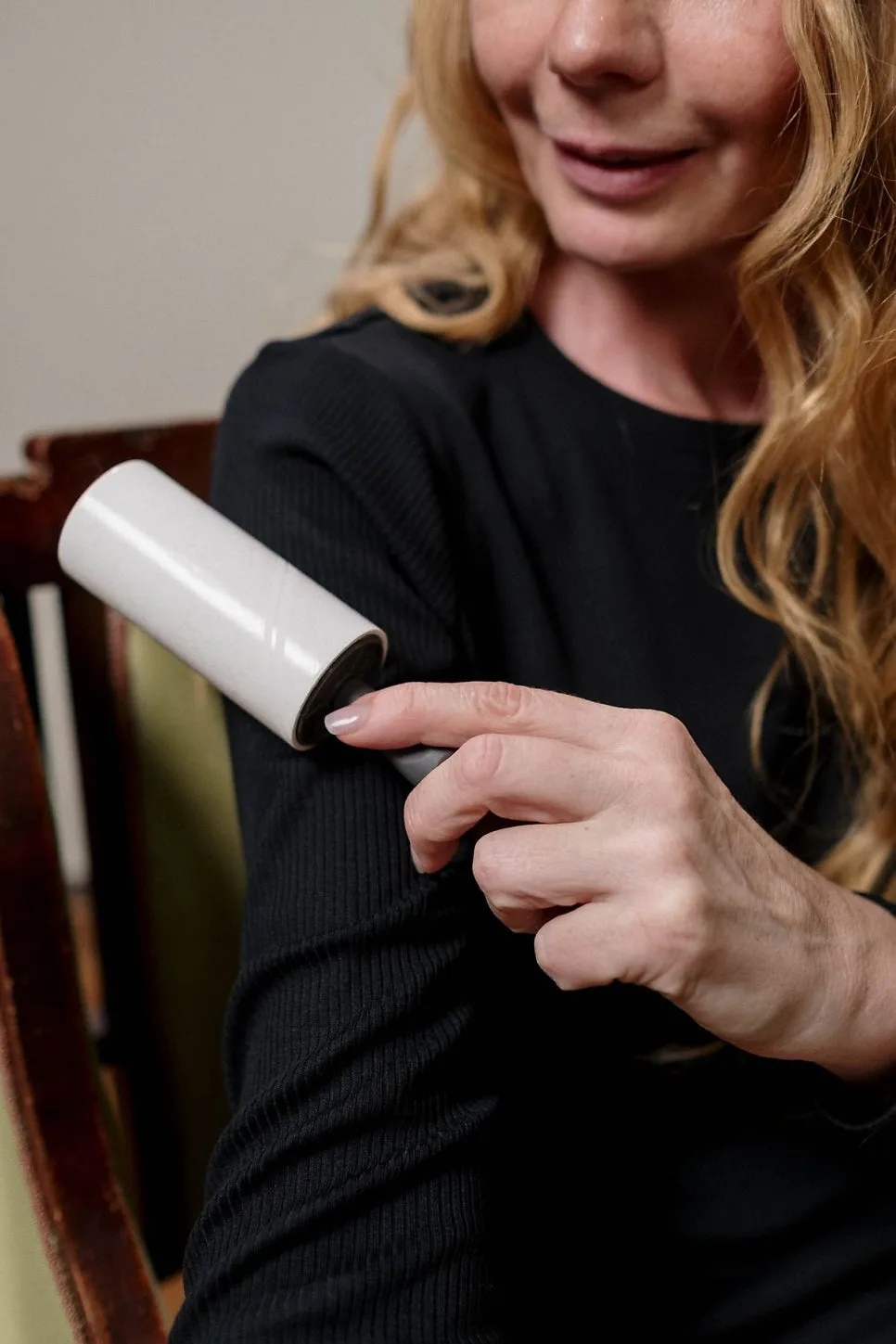
When white powder settles on the shoulder of a dark sweater, the first question is whether it is dandruff or just flaking. The short answer: scalp flakes and dandruff are not two unrelated things. Dandruff is the name for scalp flaking that falls visibly. Whether to see a doctor is judged less by how the flakes feel than by whether there is redness and whether it has spread beyond the scalp. This guide is for scalp analyzer users and salon professionals who need to explain the difference to clients.
Short answer
- The Korean Dermatological Association calls the visible falling of rice-bran-like flakes from the scalp epidermis dandruff.
- Dandruff flakes can be dry or oily, so you cannot separate them by touch alone.
- If you see redness and yellow, greasy scales, or if it spreads to the eyebrows, beside the nose or behind the ears, have a dermatologist check it.
How Do Scalp Flakes and Dandruff Differ in Name?
Scalp flakes is an everyday term for the white pieces that fall from the scalp, and dandruff is the state in which they fall conspicuously, like rice bran. One name sits inside the larger one.
Dandruff is the phenomenon in which the scalp epidermis sheds in rice-bran-like form so that flaking becomes noticeable. — Korean Dermatological Association, “Dandruff” guidance
Not all white powder is dandruff, though. The American Academy of Dermatology (AAD) explains that dandruff and dry skin look alike on the scalp and can be hard to tell apart without a dermatologist’s help.
Skin that has lost a lot of moisture also itches and flakes, and harsh hair products, low humidity and cold weather contribute.
Does Dry Powder Mean It Is Not Dandruff?
Not necessarily. The reason it is hard to separate scalp flakes and dandruff by touch is in the same Korean Dermatological Association guidance, which says dandruff arises as “small dry or greasy flakes” and is often accompanied by itching.
An overseas review paper also wrote that the flakes of dandruff and seborrheic dermatitis range from white to yellowish and can be oily or dry. A rule like “crisp means dry, sticky means dandruff” can be right sometimes and miss other times.
We picked two first-measurement photos from a usage record published for Lilai, a brand of ARAM HUVIS (아람휴비스), placed side by side. They come from records of re-photographing the same spot with our measurement device.
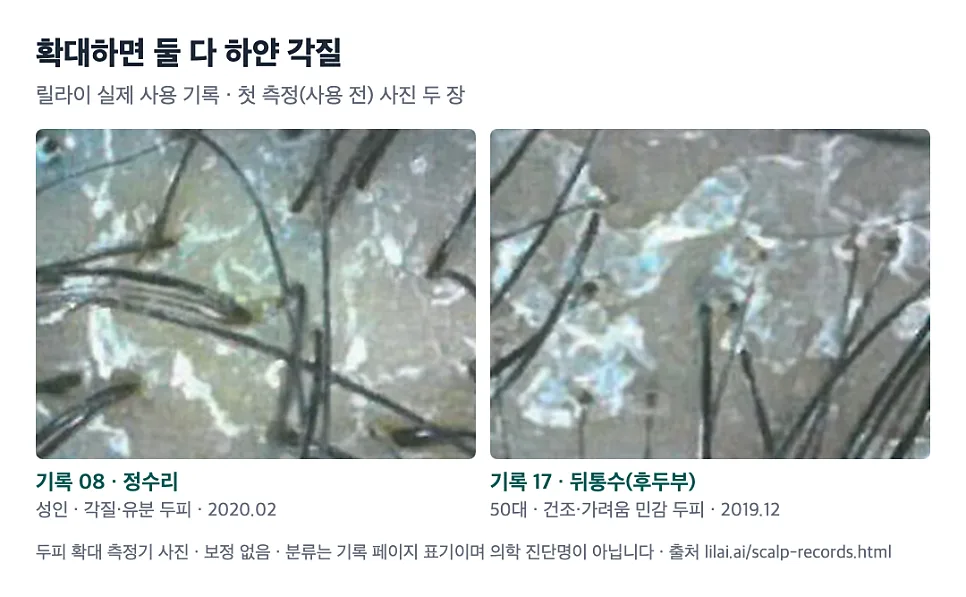
The left is the crown of an adult classified as “flaking and oily scalp.” Thin, long white pieces lie flat against the scalp, and the area around the hair roots is yellowish.
The right is the back of the head of a person in their 50s classified as “dry, itchy, sensitive scalp.” Broad, plate-like white flaking covers the scalp.
The concern categories differ, yet magnified, both show white flakes. Categories in the record are not medical diagnoses, so we did not name either photo dandruff from the image alone.
Where Do Dandruff and Seborrheic Dermatitis Part Ways?
The Korea Disease Control and Prevention Agency’s National Health Information Portal notes that dandruff is sometimes viewed as a mild form of seborrheic dermatitis. The two sit on one line, and the fork is redness and where it has spread.
Dandruff occurs only on the scalp, with itching and flaking but without noticeable inflammation. Seborrheic dermatitis occurs on the scalp and also on the face, behind the ears and upper chest, and may show distinct redness. — Borda and Wikramanayake, J Clin Investig Dermatol, 2015
The same portal describes seborrheic dermatitis as red patches (erythema) and greasy yellow scales that recur in oily areas. Beyond the scalp, it lists the areas around the eyebrows, the folds from nose to lip, and behind the ears and below the earlobes.
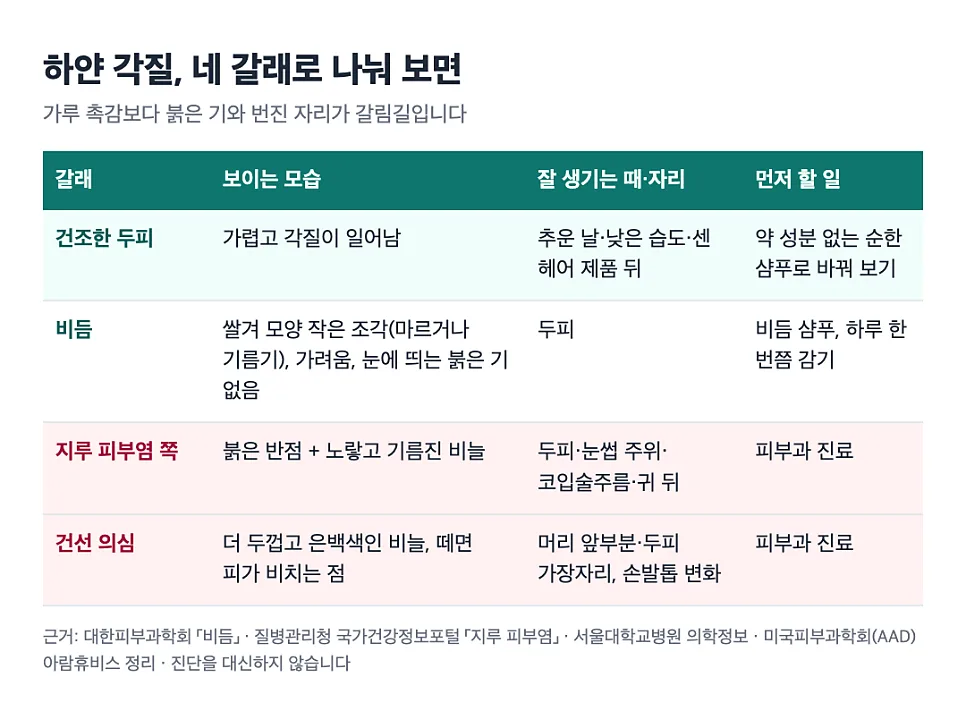
| Type | What it looks like | Typical timing and place | What to do first |
|---|---|---|---|
| Dry scalp | Itching and flaking | After cold days, low humidity, harsh hair products | Switch to a mild shampoo without medicated ingredients |
| Dandruff | Small rice-bran-like flakes (dry or oily), itching, no noticeable redness | Scalp | Dandruff shampoo, washing about once a day |
| Possible seborrheic dermatitis | Red patches plus yellow, greasy scales | Scalp, around eyebrows, nose-to-lip folds, behind ears | See a dermatologist |
| Possible psoriasis | Thicker, silvery-white scales; pinpoint bleeding when scales are removed | Front of the scalp, scalp edge, nail changes | See a dermatologist |
Basis: Korean Dermatological Association “Dandruff,” Korea Disease Control and Prevention Agency National Health Information Portal “Seborrheic dermatitis,” Seoul National University Hospital medical information, American Academy of Dermatology (AAD). Compiled by ARAM HUVIS; it does not replace diagnosis.
The bottom two rows of the table are stages to see a doctor first, not stages for choosing a shampoo. Psoriasis scales are thicker and silvery white, and according to Seoul National University Hospital guidance, removing a scale leaves pinpoint bleeding spots, and nail shape may change too.
What Should You Look at in the Mirror?
Look not only at the white powder but at the skin it was sitting on. Part the hair with a comb in several places and check whether the skin under the flakes is red or has yellow, greasy scales.
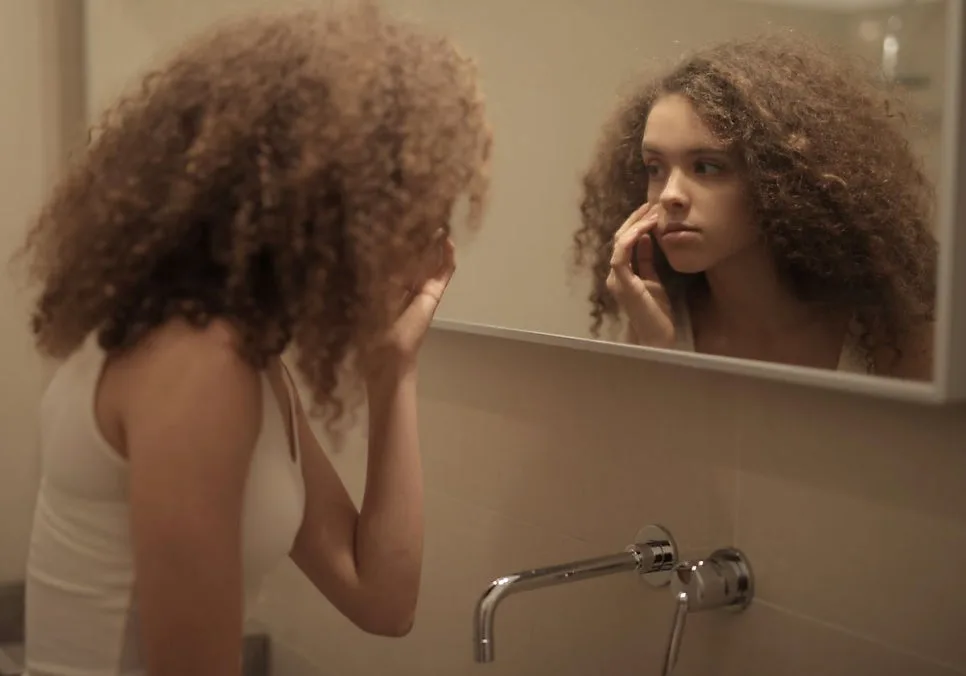
Then the face. Check whether similar scales are around the eyebrows, in the folds running from beside the nostrils to the corners of the mouth, and behind the ears and below the earlobes.
If white flakes are only on the scalp and there is no redness, it leans toward dandruff or dryness. If the face is red and scaly too, it is faster to show it to a dermatologist than to name it yourself.
Why Does It Increase in Winter?
Cold and dry indoor air work against both scalp flakes and dandruff. The National Health Information Portal lists low autumn and winter temperatures, low indoor humidity, physical and mental stress, lack of sleep and heavy drinking as factors that worsen seborrheic dermatitis.
The causes of a dry scalp that AAD lists are also low humidity and cold weather. If the powder on your shoulders increased in the season of strong heating, review humidity and sleep first.
What If Changing Shampoo Does Not Help?
First check that you chose the right direction. The advice from a dermatologist quoted by AAD is to switch to a dandruff shampoo for dandruff, or to a mild shampoo without medicated ingredients for a dry scalp.
The Korean Dermatological Association’s dandruff guidance describes washing hair about once a day and using a medicated shampoo with an antifungal ingredient two to three times a week. This is the opposite direction from washing less often because dandruff bothers you.
If drugstore or supermarket shampoos do not help, AAD advises getting a diagnosis from a dermatologist. The Korean Dermatological Association also says a biopsy is sometimes done to tell psoriasis or seborrheic dermatitis apart.

Why Do We Publish Magnified Photos?
We have made measurement devices since 2002, so reaching for photos before words when talking about white powder is something of a habit at our company. A single photo taken with the same device causes less confusion than saying “it looks like dandruff.”
The record that holds the two photos above contains 544 magnified photos of eighteen general users who visited ARAM HUVIS in 2019 to 2020. Of those, ten were classified as dry and itchy, four as flaking and oily, three as redness and trouble spots, and one as thinning hair.
With dry and itchy more than double the flaking and oily group, it is worth separating scalp flakes from dandruff once more before blaming oil for the powder on a shoulder.
Photos without color or brightness correction can be viewed in the Lilai real-use record by sliding between before-use and the last measurement.
Lilai is a brand of ARAM HUVIS, and the users in the record received the product free of charge. Cosmetics are not drugs.
FAQ
Q. If I have dandruff, is it better to wash my hair less?
The Korean Dermatological Association guidance recommends washing about once a day. Rather than reducing wash days, keep the frequency and choose a shampoo that matches whether it is dandruff or dryness.
Q. Once it clears, does it never come back?
Seoul Asan Medical Center guidance says dandruff often returns, so keep the scalp clean and not dry through steady care. Dandruff with seborrheic dermatitis is said to recur chronically in many cases.
Q. I get flaking on my eyebrows or beside my nose too.
If it has spread to oily areas outside the scalp, it leans toward seborrheic dermatitis. Having a dermatologist check it is faster than just trying another shampoo.
Q. Can a scalp analyzer tell dandruff from dry scalp?
No. A scalp analyzer records magnified photos and tracks them over time, but it does not name a condition. Record photos are for reference.
Summary
- Scalp flakes and dandruff sit between a larger name and a smaller name. Dandruff is scalp flaking that falls visibly, like rice bran.
- Dry versus oily powder does not separate them well, and a dry scalp looks similar.
- Redness, yellow greasy scales and spread to the face point toward seborrheic dermatitis, and thick silvery-white scales toward psoriasis, so see a dermatologist first.
- In winter, look at indoor humidity, sleep and stress together.
Measurements are for reference and do not replace medical diagnosis or treatment.
About ARAM HUVIS
ARAM HUVIS has made skin and scalp measurement devices since 2002. Our lineup includes ASW, a wireless analyzer that connects to a tablet or PC. For product inquiries, see contact.
References
- Korean Dermatological Association, Dandruff: derma.or.kr
- Korea Disease Control and Prevention Agency National Health Information Portal, Seborrheic Dermatitis: health.kdca.go.kr
- Seoul National University Hospital medical information, Seborrheic dermatitis: snuh.org
- Seoul Asan Medical Center health information, Dandruff: amc.seoul.kr
- American Academy of Dermatology, Is your dry scalp something more serious?
- Borda LJ, Wikramanayake TC, Seborrheic Dermatitis and Dandruff: A Comprehensive Review, J Clin Investig Dermatol, 2015
- Lilai real-use record, 544 magnified photos of 18 users (checked November 9)
ARAM HUVIS analyzers measure and display skin and scalp condition. They do not diagnose or treat any disease. Cosmetics are not drugs for preventing or treating disease.