How Do You Read Hair Density? Hairs per cm2 vs. Follicular Units
Hair density is the number of hairs in a set area of scalp, usually 1 cm2, but a report may count single hairs or follicular units. Before comparing with anyone's average, check what was counted and which area was measured, and compare only the same area over time.

When a scalp analysis report says “xx hairs per cm2,” the first question is whether that is a lot or a little. Before you compare it with anyone’s average, check what the number counted and which spot was measured. Only then can it be read properly.
Short answer
- First check whether hair density counts single hairs or follicular units within 1 cm2.
- The crown, frontal area, and back of the head naturally differ, so compare only the same area.
- Look at the trend from re-measurement under the same conditions, together with hair thickness, rather than one number. If hair is suddenly shedding heavily, see a doctor first.

What does a hair density number count?
Hair density is the number of hairs growing in a set area of scalp. Studies and analyzer reports usually give it as the count within 1 cm by 1 cm, that is, 1 cm2.
However, the field on a magnified screen is smaller than 1 cm2, so the count in that field is often converted to a 1 cm2 basis.
So when you receive a number, write down three things: what was counted, which area, and what magnification. A number missing any of these has nothing to be compared against next time.
What is the difference between hair count and follicular units?
A follicular unit is a small bundle of hairs that emerge from the scalp together. One bundle usually holds 1 to 4 hairs, so on the same scalp, counting follicular units gives a smaller number than counting hairs.
In donor scalp of East and Southeast Asian men, follicular unit density averaged 61.1 per cm2 and hair density averaged 111.2 per cm2. — Dermatologic Surgery, 2017
This study magnified and counted the back and sides of the head in 70 Asian men receiving a first hair transplant. It looked only at donor areas and only at men with androgenetic alopecia, so it is hard to apply directly to the crown or to women’s scalps.
That means the number can differ by nearly a factor of two depending on the unit. Check first whether the number on a report counts hairs or follicular units.
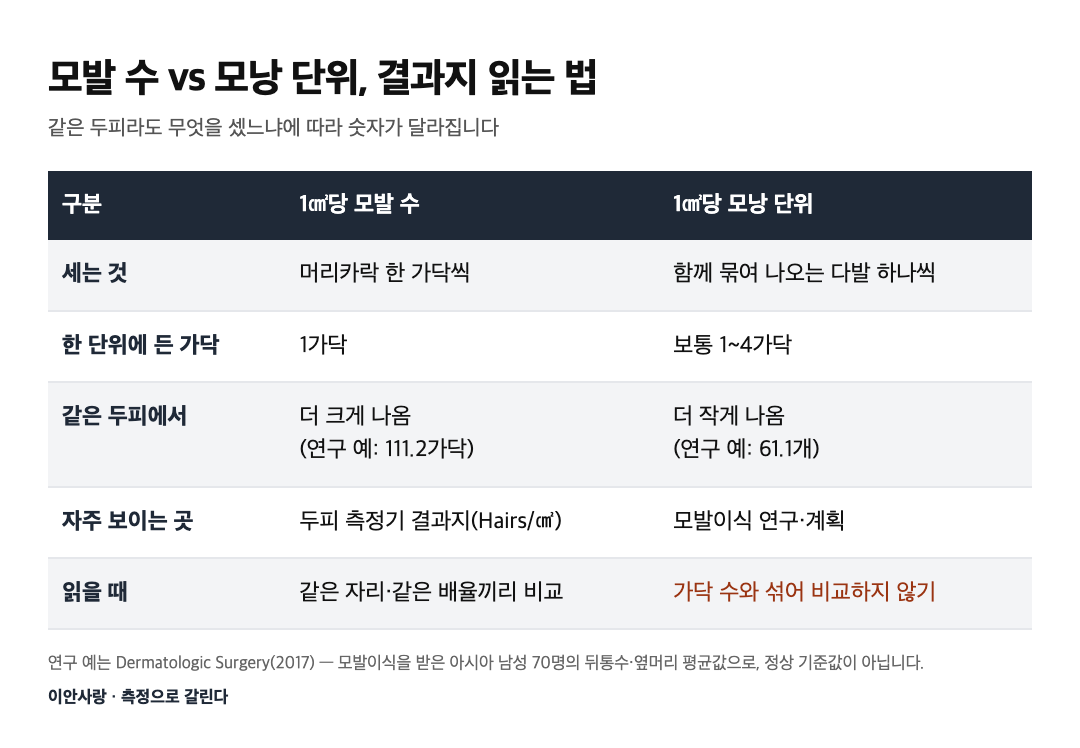
| Item | Hairs per cm2 | Follicular units per cm2 |
|---|---|---|
| What is counted | Each single hair | Each bundle of hairs that emerge together |
| Hairs in one unit | 1 hair | Usually 1 to 4 hairs |
| On the same scalp | Comes out larger (study example: 111.2 hairs) | Comes out smaller (study example: 61.1 units) |
| Where it is often seen | Scalp analyzer reports (hairs/cm2) | Hair transplant studies and planning |
| When reading | Compare the same area and the same unit | Do not mix with hair counts |
The study example is the average of the back and sides of the head in 70 Asian men who received a hair transplant (Dermatologic Surgery, 2017). It is not a normal reference value.
Why do numbers differ from one area to another?
Hair density depends on where on the scalp you measure. Some areas are naturally dense and some sparse, and the amount lost with age also differs by area.
Hair density decreased with age, especially at the top, between the crown and the back of the head. — European Journal of Dermatology, 2013
This study photographed six scalp sites in 1,357 Koreans in their teens through 60s. The abstract gives no per-site averages, so only the trend is quoted here.
A 2024 study of 120 healthy Indian men found higher density at the frontal area and the back of the head and lower density at the sides. The country and subjects differ, so the numbers are not quoted, but the point is the same: even within one person’s head, numbers differ from area to area.
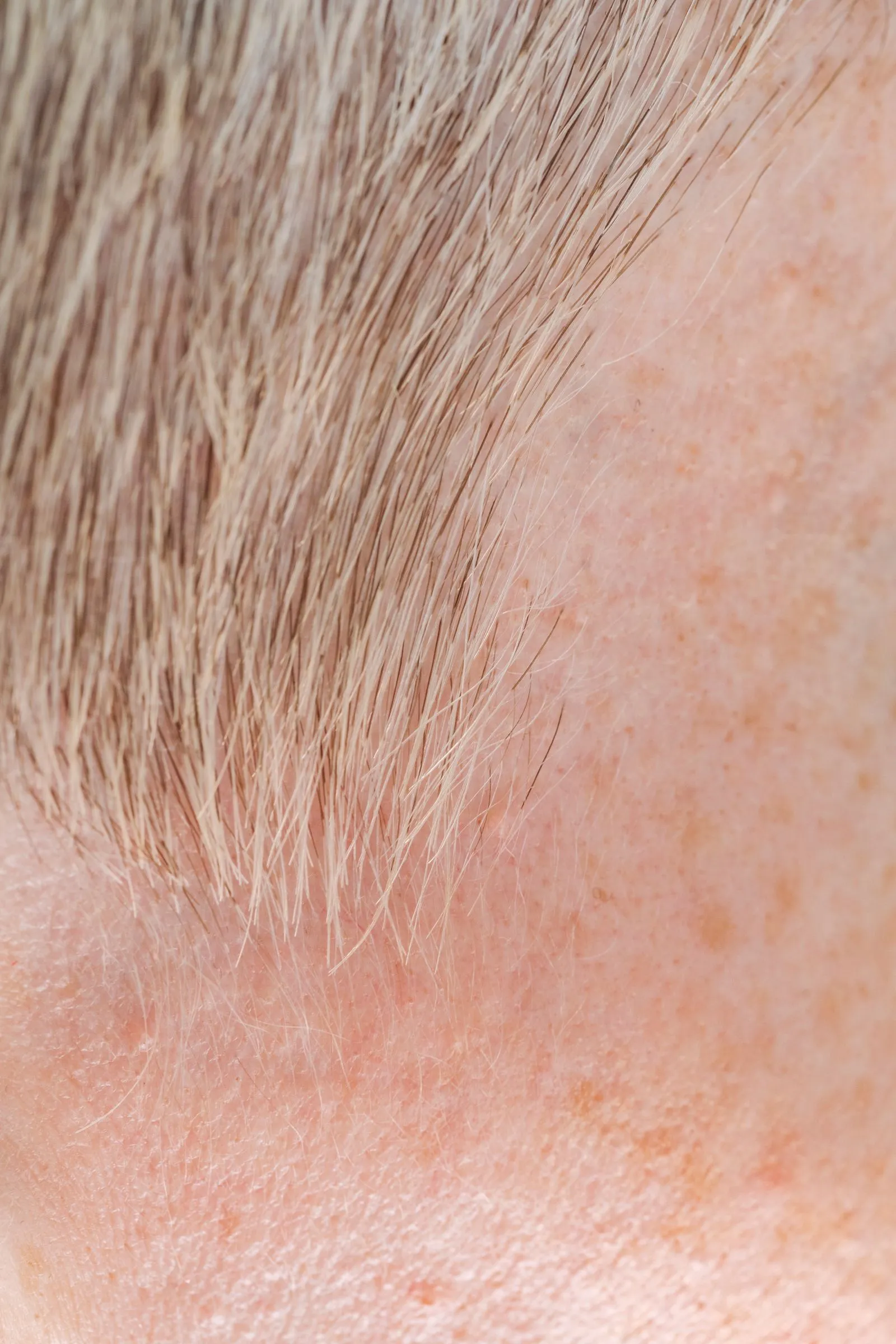
So placing a crown value next to a back-of-head value is a wrong comparison. Compare only numbers with the same area name on the report.
How do you re-measure hair density under the same conditions?
When re-measuring, match the place, device and magnification, area, and hair state. If even one changes, the number shows the difference in conditions before it shows any difference in hair.
In research, to find the same spot again, the scalp is marked with a 1 cm2 frame and the hair inside is cut short before photographing (International Journal of Trichology, 2009).
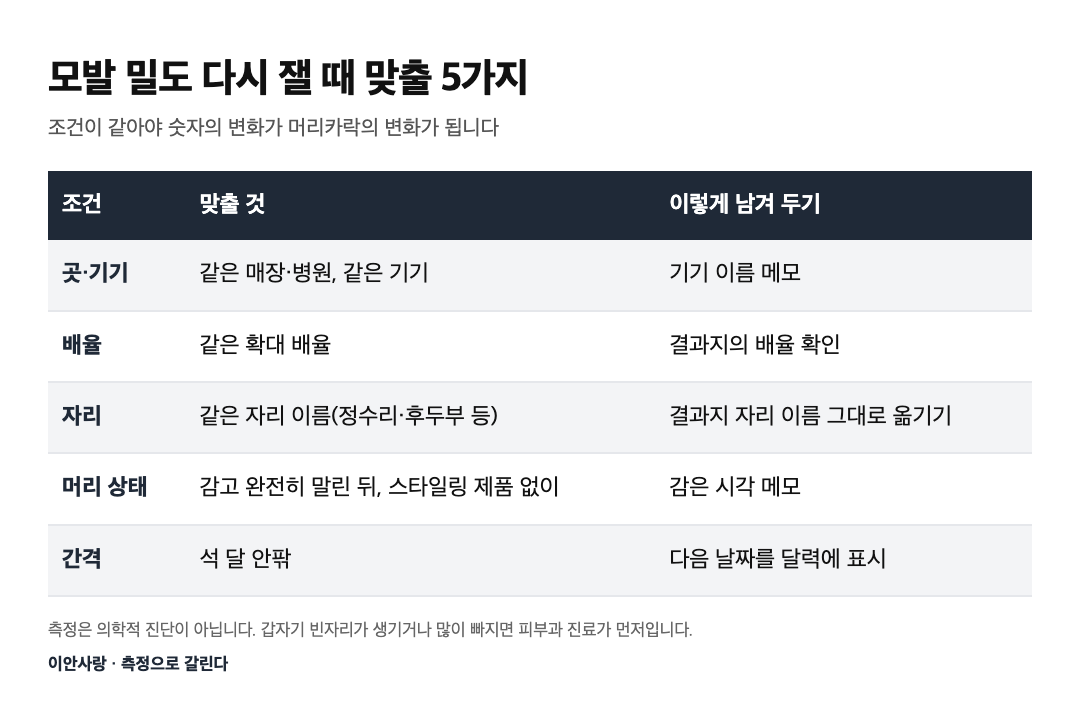
| Condition | Match this | Record it like this |
|---|---|---|
| Place and device | Same salon or clinic, same device | Note the device name |
| Magnification | Same magnification | Check the magnification on the report |
| Area | Same area name (crown, back of head, etc.) | Copy the area name from the report as written |
| Hair state | Washed and fully dry, no styling products | Note the time you washed |
| Interval | About three months | Mark the next date on a calendar |
Measurement is not a medical diagnosis. If you suddenly get bald spots or lose a lot of hair, see a dermatologist first.
A practical approach is to write down the area name on the report, show it at your next visit, and ask them to measure the same spot.

It is best to go with washed, fully dry hair and no wax or spray. Clumped hair can change the count inside the field. For the interval, about three months shows a trend more easily than measuring every few weeks.
Why not judge from one number?
Hair density alone makes it hard to judge how full the hair is. Even with the same hair count, if each strand gets thinner, hair looks sparser, and that change does not show up directly in the density number.
The 2024 Indian study also noted that the analysis software may not capture all gray hairs and fine vellus hairs, and that differences between people were large even within the same area.
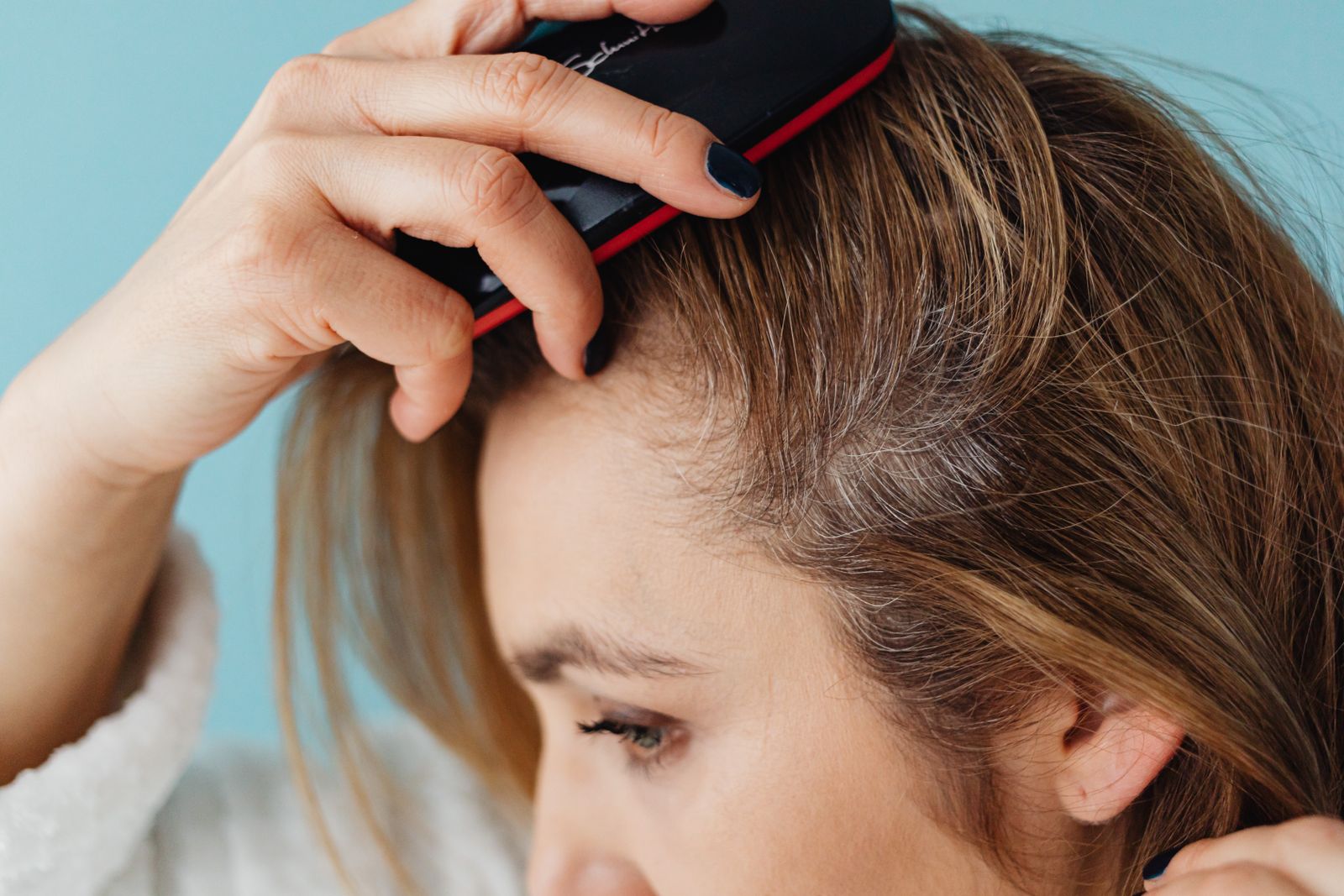
So when you get a density number, I recommend reading thickness and the magnified photo together. It is easier to read against your own previous value for the same area than against someone else’s average.
When should a doctor come first?
Regardless of the numbers, if any of the signs below appear, see a dermatologist first instead of continuing to measure.
- Hair loss is increasing and each strand feels thinner
- Round or band-shaped bald patches appear within a day or two
- Hair comes out in clumps when combing
- The affected area is very itchy or burning, or hurts when pressed
These follow the guidance of the American Academy of Dermatology (AAD).
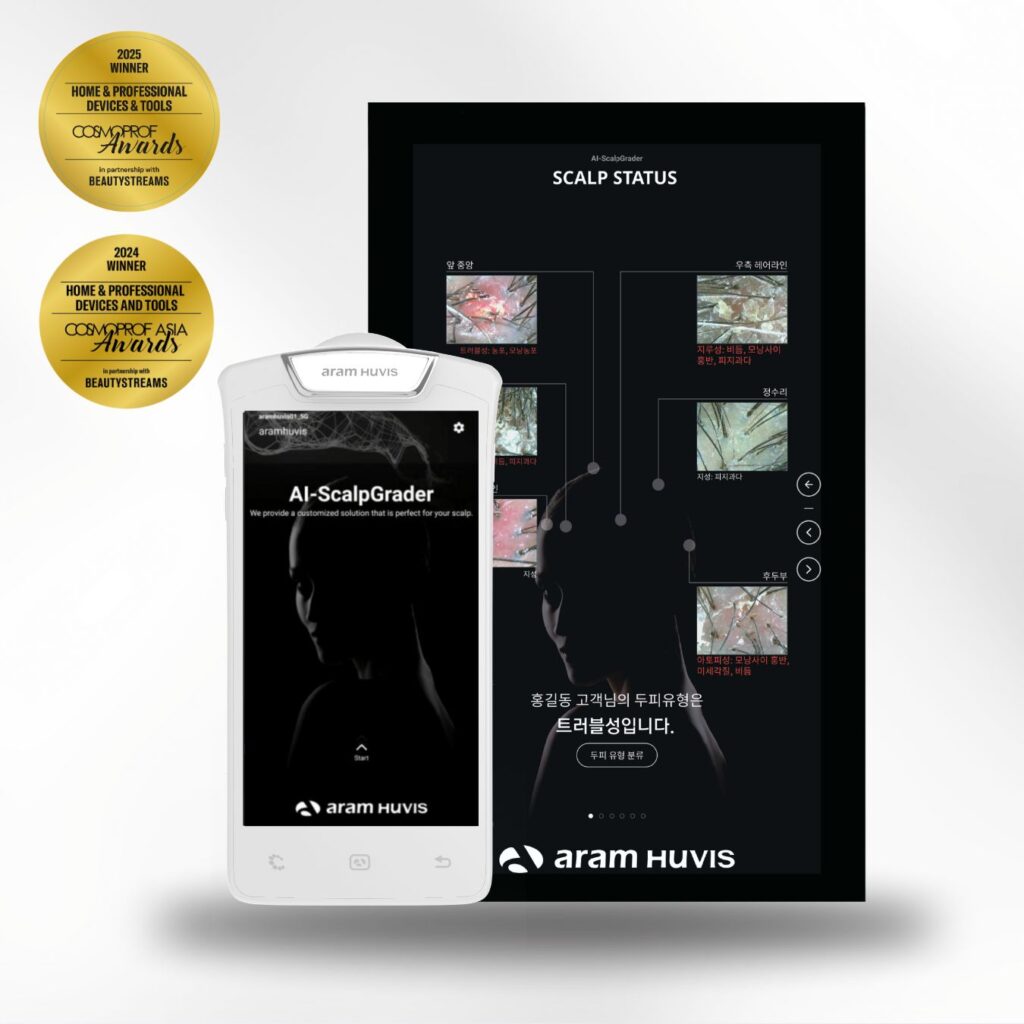
Our scalp analyzer AI-ScalpGrader shows hair density by area, such as the left and right frontal hairline, front center, crown, and back of the head. Because the area name stays with the result, it is easy to compare the same area next time.
Some analyzers, such as our hair and scalp analyzer ASW 200, view density through a 60x lens and thickness through a 200x lens. Density is the hair count in a 4 mm by 5 mm field multiplied by 5, on a 1 cm2 basis. For example, if you count 18 hairs in the field, it shows 90 hairs per cm2.
Because a small field is magnified and counted, matching the measured spot is the first step in reading the number. To follow density area by area, ask a salon, scalp clinic, or dermatology clinic that uses a magnifying analyzer to measure the same area again.
About ARAM HUVIS
Since 2002, ARAM HUVIS (아람휴비스) has built skin and scalp analyzers, including the AI-ScalpGrader and ASW 200 for scalp and hair. To discuss adoption for your salon or clinic, contact us.
Hair density FAQ
Q. How many hairs per cm2 is normal?
Research values differ by country, sex, age, area, and measurement method, so one number cannot be set. Compare against your own previous value at the same area.
Q. My follicular unit number is smaller than the hair count. Is that wrong?
No. One follicular unit usually holds 1 to 4 hairs, so it is natural. Do not compare numbers in different units.
Q. How often should I measure hair density?
Hair changes appear slowly, so an interval of about three months is enough. If you suddenly lose a lot of hair, see a doctor first regardless of the interval.
Summary
- First check whether hair density counts hairs or follicular units per cm2.
- The crown, frontal area, and back of the head differ by nature, so compare only the same area.
- When re-measuring, match the place, device, magnification, area, and hair state.
- Look at thickness and photos together rather than one number, and see a doctor first for warning signs.
Measurements are for reference and do not replace medical diagnosis or treatment.
Related reading
- Hair thickness tracking: scalp photos with the same spot, light, and interval
- How to explain measurement results to clients
References
- Ortega-Castillejos DKA, Pathomvanich D, Retrospective Assessment of Follicular Unit Density in Asian Men With Androgenetic Alopecia, Dermatologic Surgery, 2017 — PubMed
- Kim JE et al., Phototrichogram analysis of normal scalp hair characteristics with aging, European Journal of Dermatology, 2013 — PubMed
- Asfiya A et al., Trichoscopic Analysis of Healthy Indian Males, Indian Dermatology Online Journal, 2024 — PMC
- Dhurat R, Saraogi P, Hair Evaluation Methods: Merits and Demerits, International Journal of Trichology, 2009 — PMC
- American Academy of Dermatology (AAD), Hair loss: Signs and symptoms — aad.org
- ARAM HUVIS, AI-ScalpGrader and ASW product information and FAQ — aramhuvis.com
ARAM HUVIS analyzers measure and display skin and scalp conditions. They do not diagnose or treat any disease. Cosmetics are not drugs for the prevention or treatment of disease.